

What is HIFU?
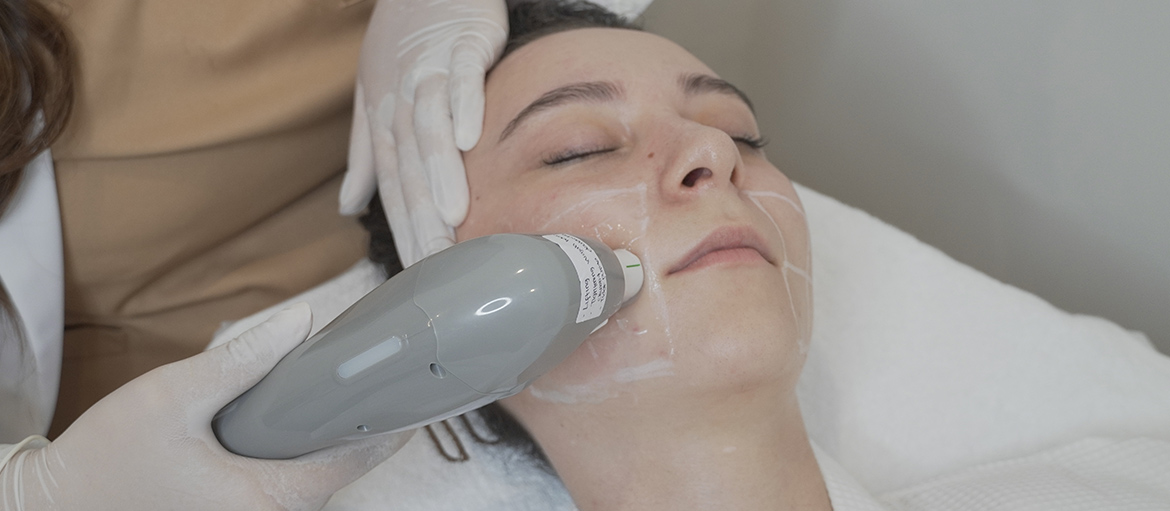
The goal of HIFU, like the majority of energy-based therapies, is to slightly damage the collagen in your skin under control. HIFU concentrates its sound-energy waves at a single place to achieve this. These target a predefined place up to 4.5mm beneath the skin’s surface rather than the skin’s surface like a laser would. Each ultrasound pulse is intended to penetrate deeply into the skin in order to cause the collagen to contract. This will further tighten the skin during the following few months as new collagen and elastin are stimulated to form.
For increased tightening, it may do this at several depths (1.5 mm, 3 mm, and 4.5 mm) below the surface. The ultrasound can penetrate 4.5mm below the skin’s surface to the superficial muscular aponeurotic system (SMAS). In order to do a face lift, surgeons must work with the SMAS, a layer of facial muscle tissue.
Is Ultherapy the same as HIFU?
There are a few slightly different versions of HIFU available, some of which are branded, as there are with any energy-based adjustments. Like not all vacuum cleaners are Hoovers, any of them can be referred to as HIFU because this is a form of treatment rather than a specific brand. Therefore, even if “HIFU” is offered at two different clinics, it may not be the same treatment there. The two most well-known branded HIFU products are Ultherapy, the only ultrasound-based treatment product to get FDA clearance for its stated claim of elevating the skin, and Ultracel, which combines HIFU with radio frequency and microneedling, if necessary.
Does HIFU hurt?
Since HIFU is a rapid procedure with few obvious side effects, it is frequently referred to as a “lunchtime face lift.” However, since there may be some redness and swelling following, you may not want to go back to work right immediately. The next day, there may be some minor bruising occasionally, but overall, recovery time is short. However, to be really honest, the majority of people find HIFU to be rather uncomfortable or even painful. Many medical professionals will suggest taking painkillers before the procedure or offering a topical anesthetic. However, this discomfort only lasts for the duration of the procedure.
Does HIFU work?
Although each patient’s anatomy, concerns, and treatment plan are unique, HIFU does indeed “work.” It’s a wonderful alternative for people who wish to tighten and rejuvenate their skin all over, making their face look lifted and smoother overall, and who have jowls or significantly sagging, aged skin. If you’re not certain whether injectables are right for you or you don’t want to undergo a course of treatments, HIFU may be a nice first step into therapy because it is a one-time procedure and the results can last up to 18 months.
It is up to you to earn the face you have at fifty; nature provides you the face you have at twenty.


Leave a Comment